Oil Hardened & I.H.T. Wires
Ten Penthor™ grades of oil-tempered silicon/chromium/vanadium spring wire — continuously quenched to martensite and tempered in a lead bath for a stress-relieved, homogenous structure with no deformation texture. Built for fatigue life, elevated-temperature reliability and high resistance to relaxation.
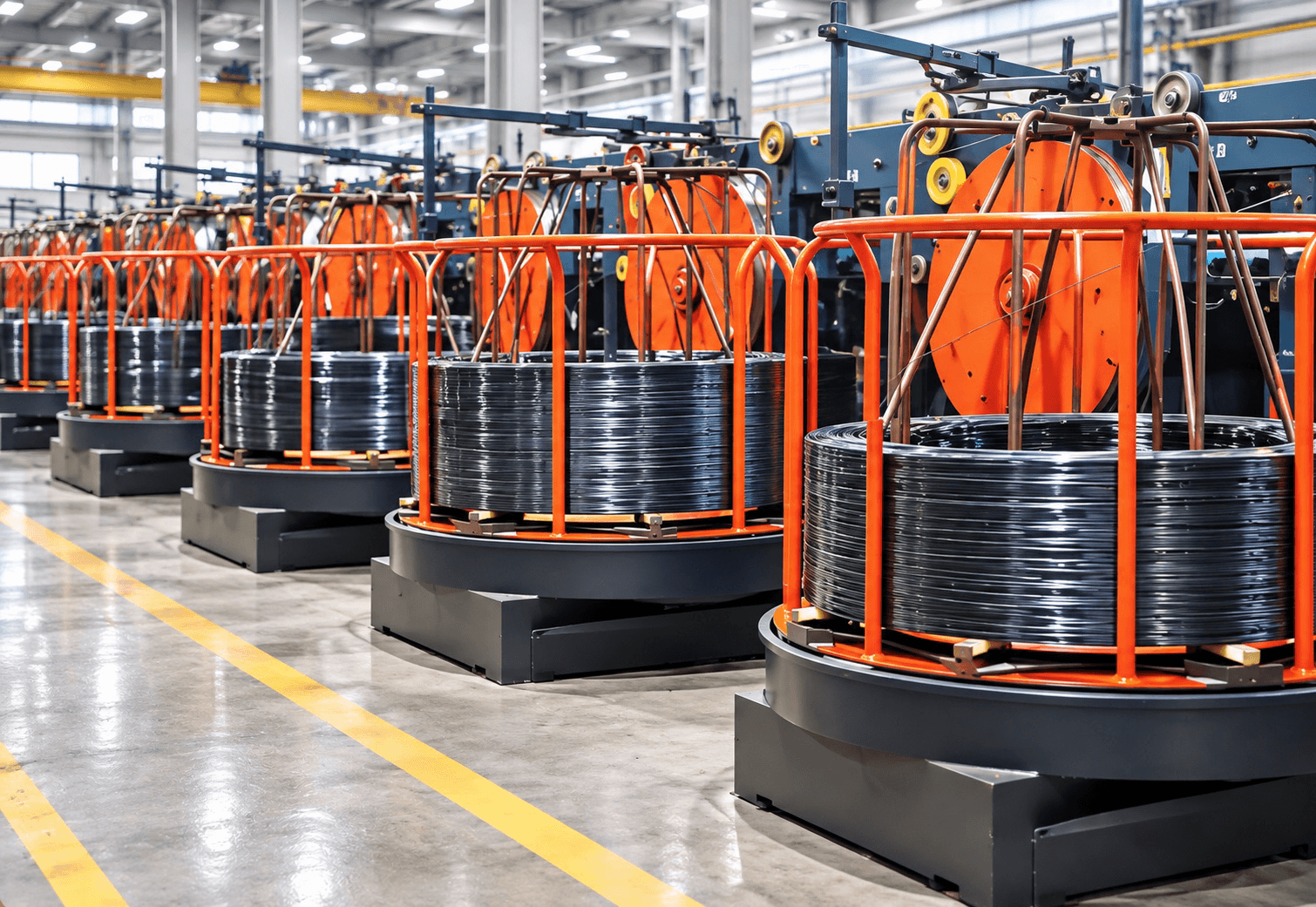
The continuous oil-tempering process, in ten grades.
The continuous oil-tempering process optimizes wire properties and results in a stress-relieved, homogenous wire structure with no deformation texture. Our customers appreciate the durability of these wires, their excellent fatigue life, the reliability when subjected to elevated operating temperatures and high resistance against relaxation.
One thing worth knowing before you order. Since February 2024, oil hardened and tempered spring steel wire to IS 4454 Part 2 has been covered by a Ministry of Steel quality control order — BIS conformance is mandatory, not optional. Every lot we supply against this standard comes with the certification to match.
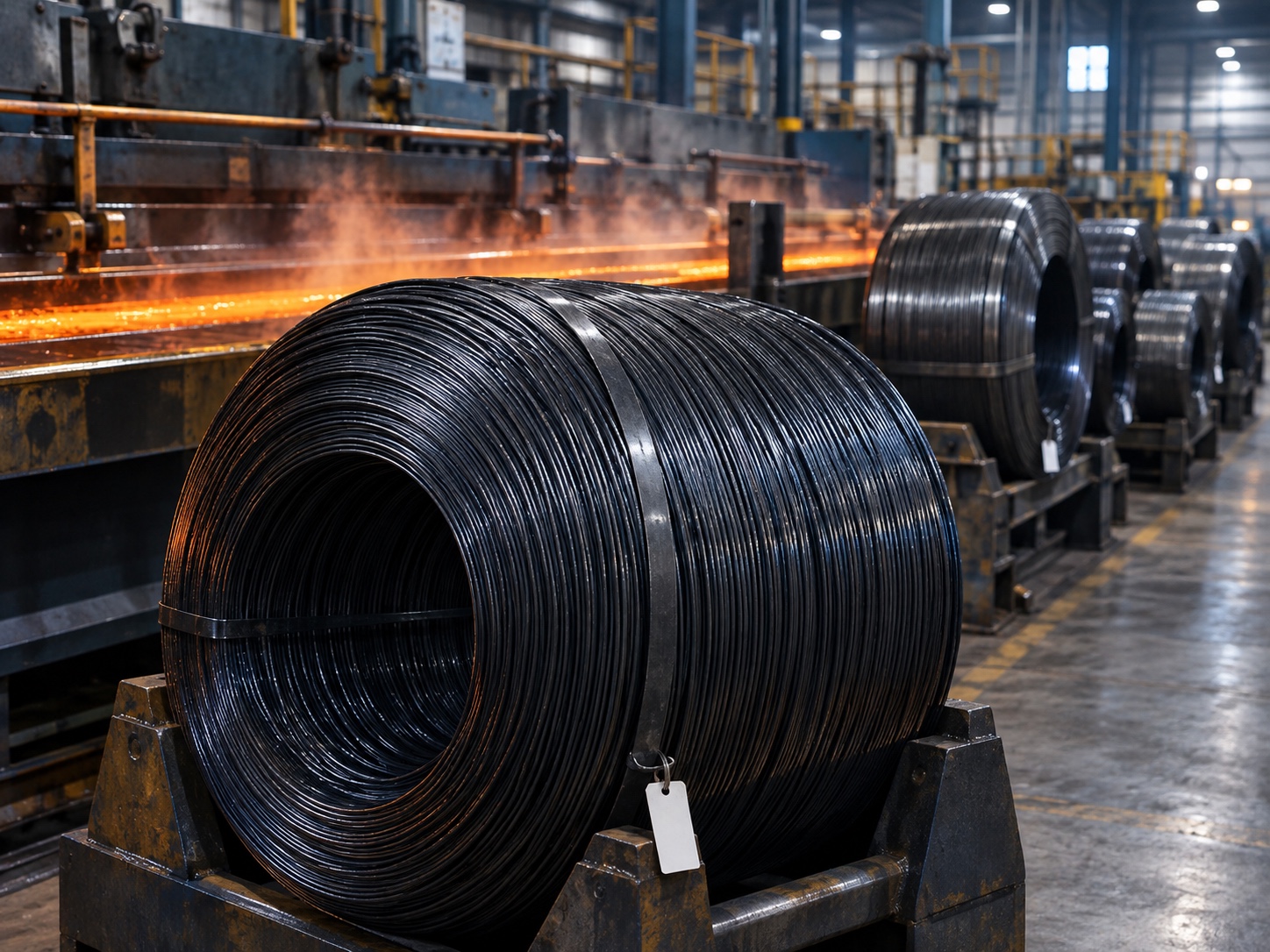
The Penthor™ family. All ten grades below trade under Pengg Usha Martin's Penthor™mark — silicon/chromium and silicon/chromium/vanadium alloyed, oil hardened and tempered spring wire, several drawn from shaved wire rod for the most demanding valve-spring duty. Manisha Wires is a stocking supplier for this range. Penthor is Pengg Usha Martin's trademark, not ours, and the specification below is theirs: what we add is availability, the certificate, and someone to argue grade selection with before you commit.
Pick a grade and a diameter. Everything else follows.
Tensile strength, tolerance, minimum reduction of area, torsion count and permissible decarburization depth all move with grade and diameter. Filter by duty, pick a Penthor™ grade, then drag the slider to the diameter you would actually be quoted on.
| Wire dia. (mm) | Tolerance (mm) | UTS (MPa) | Min. reduction area (%) | Min. torsions (nos.) |
|---|
Tolerance and diameter bands are read directly from the grade's spec sheet; reduction-area and torsion minimums are grouped exactly as tabulated. Please inquire for special tolerances, tensile bands or sections.
| Element | Range (%) |
|---|
Raw material.
Cleanliness.
| External standard | |
| Further similar standards | |
| Applications | |
| Range of diameters |
Surface inspection.
Heat treatment.
Shot peening.
Coil-level checks.Range of tensile strength within one coil, ovality, yield point and torsion-test method are common to every grade in this family — see the "Standards" tab for the full list, and inquire for special tolerances, tensile bands or sections.
Same wire family, ten different tensile ceilings.
Ultimate tensile strength band at a common ~2.00 mm diameter, across all ten Penthor™ grades. Alloying (silicon/chromium/vanadium, plus nickel on the 1064) and the shaved-wire-rod route separate the valve-duty grades from the general-purpose ones. Click a bar to load that grade into the explorer above.
Ultimate tensile strength, ~2.00 mm Ø
MPa, min–max bandBars sorted high to low. Hover for the exact band; click to open that grade in the explorer.
Match the duty. Then match the grade.
Beyond round. Shaped to section.
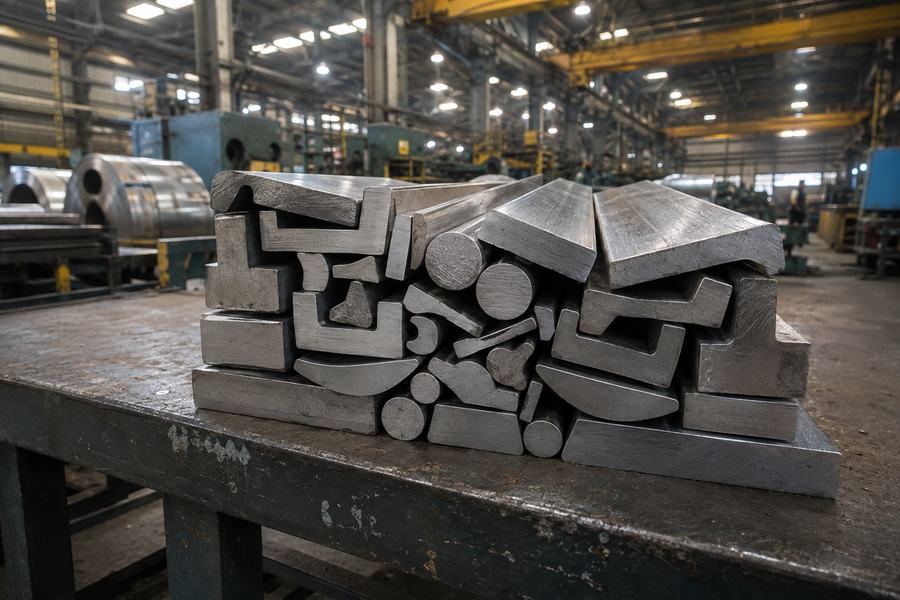
Oil-tempered wires across all Penthor™ grades can be supplied shaped — square, rectangular, flat, oval or two-side flat — with special profiles on request. Material to EN 10270-2 and other international standards, and to your own specification.
| Applicable specification | Material acc. to EN 10270-2, other international standards and customer specifications |
| Types of material | Oil-tempered wires across all grades served by the Pengg Group |
| Raw material | Wire rod according to in-house specifications |
| Mechanical properties | Tensile and hardness according to customer requirements |
| Applications | Engine valve, automotive transmission electrical connector parts, automotive door hinges, conveyor screws, piston rings, and other engineering applications |
| Size | Tolerance |
|---|---|
| >1.50 mm – 3.00 mm | ±0.020 mm |
| >3.00 mm – 5.00 mm | ±0.030 mm |
| >5.00 mm – 6.00 mm | ±0.040 mm |
| Nominal width | Tolerance | Thickness | Tolerance |
|---|---|---|---|
| 1.50 mm – 3.00 mm | ±0.050 mm | 1.00 mm – 2.00 mm | ±0.015 mm |
| 3.00 mm – 5.00 mm | ±0.070 mm | 2.00 mm – 4.00 mm | ±0.020 mm |
Other dimensions and tolerances on special request.
Coil, carrier or crate.
Three standard delivery forms, sized to wire diameter. Packaging materials are recyclable — paper or LDPE (low-density polyethylene) — and carriers are made of steel tube.
From wire rod to finished spring wire.
Oil tempering is a demanding process, and knowing what it involves is part of specifying it properly. An overview of the five key stages at the mill is below — click a card for the full note.
High tensile, high springiness — handle accordingly.
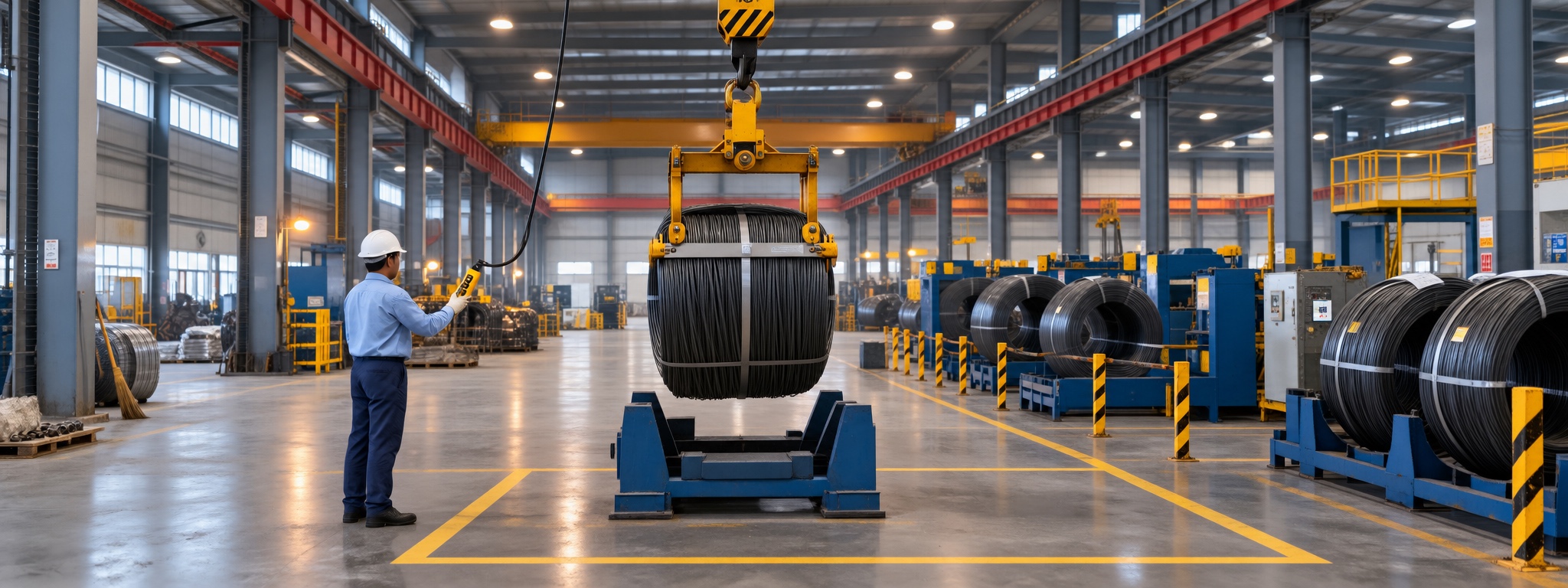
Oil hardened and tempered wires are very high-tensile. Straight cast and very high springiness mean they can spring open swiftly with high force when the binding straps are cut.
When cutting binding straps: bind a few rings of the coil together with a cable tie first, and while cutting cable ties, tie the free end to a former or pay-off arm to avoid accidents.
Be attentive while running coils — the springiness action can cause fatal accidents. Use a safety ring on top of the coil, or a cross bar, where possible.
Ensure the wire is not mechanically damaged while cutting the steel strap — damage may cause breakage during subsequent coiling.
If a portion of coil is left after coiling the required number of springs, apply rust-preventive oil, pack it properly and shift to storage after identification.
If wires are received in wet condition at the time of receipt, intimate us immediately for further action.
Handle wires carefully to avoid mechanical damage — damage on the surface may cause breakage during coiling.
Store wires in proper, conducive conditions, preferably horizontally on dry wooden planks, and keep them away from water and moisture to avoid rust.
Ensure wires are stored in proper packed condition to protect against atmospheric influences and rust.
Ensure oil hardened and tempered wires are used within six months of receipt.
Springs coiled from the defective portion of eddy-tested wire — painted yellow / white — must be discarded and never mixed with OK springs.
Avoid metal-to-metal and metal-to-concrete-floor contact during storage, handling and usage of these wires.
Send the spec. We confirm before you commit.
Give us the grade, diameter and quantity. We come back with availability, price and delivery — and the mill test certificate that goes with the lot. For a live requirement, the phone is faster than the form.