Profile Shaped Wire
Wire drawn or rolled into the cross-section your part actually needs — flat, square, rectangular, trapezoidal, half-round, triangular, L-shaped or a shape unique to your drawing — instead of round stock machined down to fit.
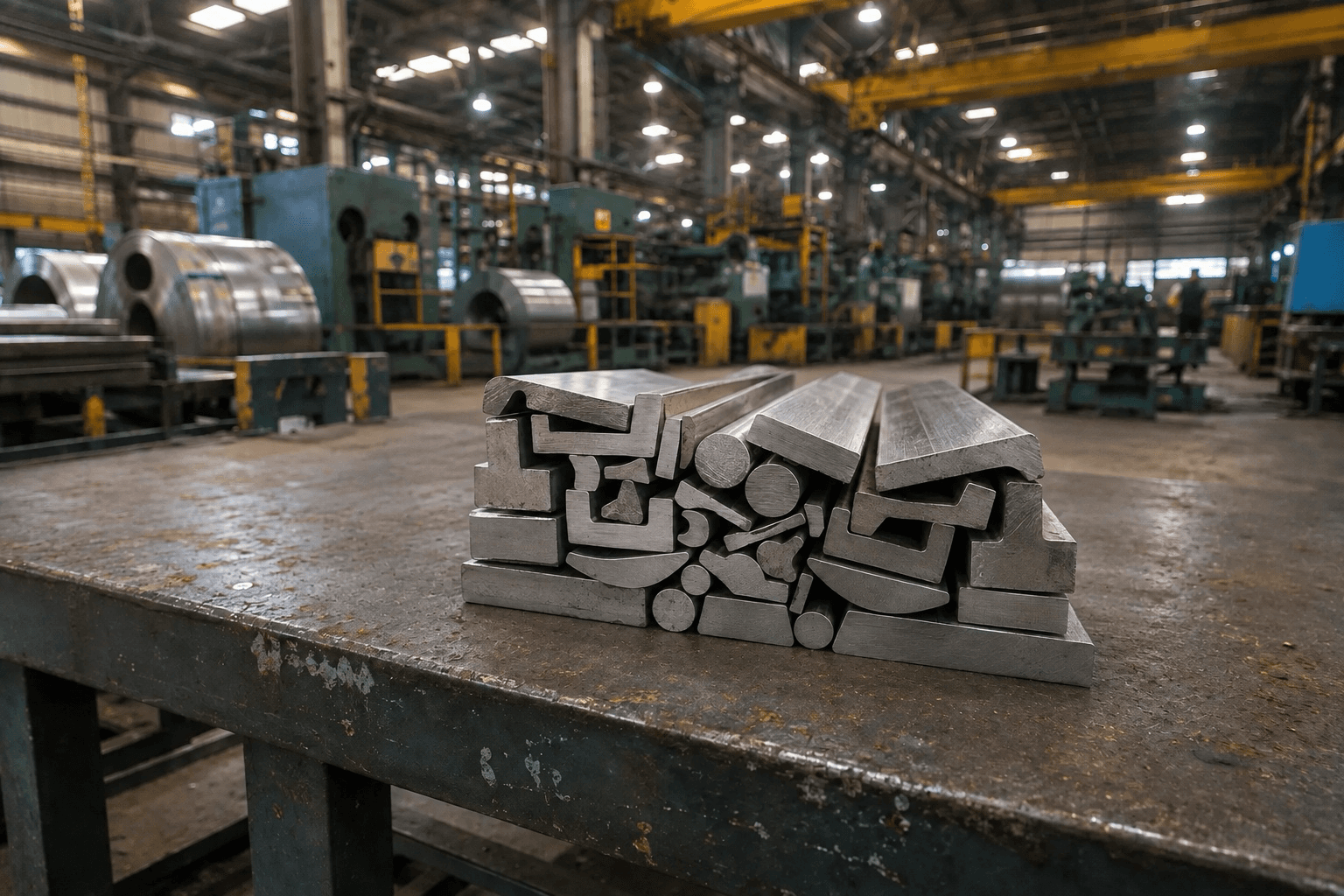
Shaped once, not machined twice.
Starting with the right cross-section changes what happens downstream — for the part, and for the production line building it.
Custom cross-sections
Flat, square, trapezoidal, half-round, triangular and more — including non-symmetrical shapes for a genuinely unique requirement.
Enhanced performance
Optimized stress distribution and contact surfaces give higher load capacity and better fatigue life than round wire in the same application.
Cost & material savings
Near net-shape wire removes secondary machining — no grinding a round wire flat — cutting production time and waste.
Wide application range
Automotive and aerospace springs, medical instruments and implants, electronics contacts — anywhere a precise form matters.
The shape is one choice.
The alloy is another.
Any of the cross-sections above can be drawn in a material selected for the part's own tensile, corrosion or fatigue requirement.
Held to a high carbon range for maximum tensile strength per cross-section — the default choice where the part doesn't need corrosion resistance and cost efficiency matters most.
- Typical use
- Springs, snap rings, retaining rings
- Strength
- High
- Corrosion resistance
- Standard (coated on request)
- Standard
- To customer drawing
Pick the cross-section your part needs.
Starting from the right cross-section removes a machining step entirely — pick a profile to see it rendered, and where it's typically used.
Used for wave springs and flat springs, where a flat cross-section gives the spring its working profile directly.
Where a round wire
simply won't fit.
A precise wire form does part of the job a round cross-section can't — matching a groove, spreading a load, or holding a contact shape.
Wave springs, flat springs and custom-section coil springs formed directly from the drawn profile.
Circlips and snap rings, where square or rectangular section gives greater seated contact area.
Contacts and connector pins where a flat or rectangular profile matches the mating geometry exactly.
Triangular and trapezoidal profiles wound to form self-cleaning filter slots.
Spring and clip applications where optimized stress distribution improves fatigue life under vibration.
Specialty wire forms for instruments and implants where exact geometry is part of the specification.
Contacts, springs and connector pins where a precise wire form fits the assembly without secondary work.
One extra step,
where the shape is set.
The mill's line is the same as for round wire, with one addition — profile rolling or shaping, right before finish drawing sets the final dimension.
Where the cross-section is actually formed — the one stage round wire never sees.
Have a drawing?
That's all we need to start.
Every route below carries your selected shape and material, so the first reply can be about feasibility rather than a list of questions.